

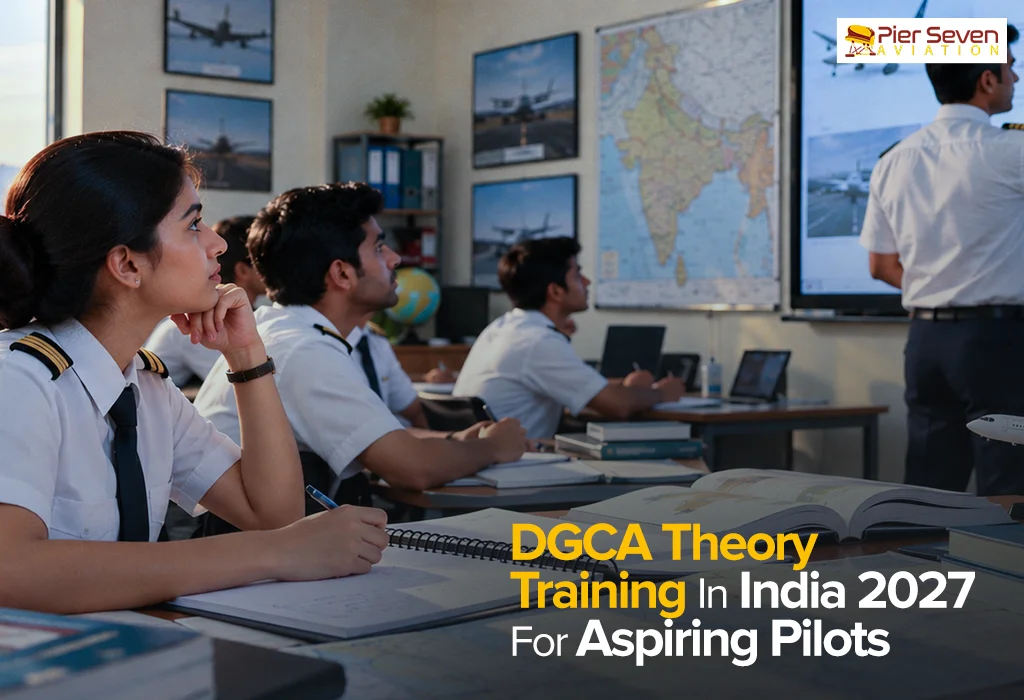
Becoming a professional pilot requires more than learning to operate an aircraft. Before students can confidently apply their skills in the cockpit, they need a strong understanding of navigation, meteorology, aircraft systems, aviation regulations, and operational procedures.
For aspiring Indian pilots preparing for 2027, choosing the right DGCA-approved training institute can make the theory stage more structured and manageable. P7 Aviation also provides theoretical knowledge training with pilot certification Sharjah at its Sharjah facility as part of its wider aviation training services.
What Is DGCA Theory Training?
DGCA theory training forms the academic foundation of a pilot’s licensing journey in India. It prepares candidates for relevant flight-crew examinations and helps them understand the principles behind safe and professional flight operations.
The Directorate General of Civil Aviation uses the Pariksha portal for flight-crew examination registration and related processes. According to the current DGCA information, applicants other than the PPL category generally need to have passed 10+2 with physics and mathematics from a recognized board or university or an equivalent qualification.
The theory stage should therefore be treated as more than examination preparation. A strong conceptual foundation can also make subsequent flight training easier because students understand the principles behind what they practice in the aircraft.
Start With The Right Eligibility Checks
Before joining our DGCA-approved training institute, aspiring pilots should first confirm that they meet the applicable educational and administrative requirements.
Some important areas to check include:
- 10+2 qualification and required subjects
- Medical eligibility
- DGCA Computer Number
- Pariksha registration
- Applicable examination category
- Current examination requirements
- Required documents
- Intended pilot license
DGCA has also introduced automated computer-number generation using DigiLocker for eligible candidates whose academic records can be verified digitally. Candidates should follow the latest instructions on the official portal because procedures can change.
Understanding The Core Theory Areas
The subjects required depend on the license and examination pathway. Students should always check the latest DGCA requirements rather than relying on old course material.
However, aspiring commercial pilots commonly need knowledge in areas such as the following.
Air Regulations
This subject introduces aviation rules, operating procedures, airspace, pilot responsibilities, and the regulatory framework surrounding flight operations.
The challenge is often precision. Students need to understand how regulations apply to actual situations rather than simply memorising definitions.
Air Navigation
Navigation combines concepts with calculations. Students may work with headings, tracks, distances, time, charts, and flight-planning considerations.
Regular problem-solving is important because navigation questions require both accuracy and speed.
Meteorology
Weather directly affects flight safety and planning. Students learn about atmospheric conditions, pressure, wind, visibility, clouds, thunderstorms, icing, turbulence, and weather information.
Understanding relationships between weather conditions is more useful than memorising isolated terms.
Aircraft and Technical Knowledge
Students develop an understanding of aircraft structures, engines, electrical systems, instruments, flight controls, and other systems.
This knowledge becomes especially valuable once theoretical concepts are connected to real cockpit operations.
Build A 2027 Study Strategy
Trying to study every subject in the same way can make preparation unnecessarily difficult. A better strategy is to divide learning into clear stages.
- Learn: Build an understanding of each concept through structured lessons and reliable study material.
- Practice: Solve questions, calculations, chart-based exercises, and application problems.
- Review: Revisit difficult topics at planned intervals.
- Test: Use timed mock examinations to measure accuracy and speed.
- Correct: Maintain a record of mistakes and revise the concepts behind them.
This approach turns revision into a continuous process rather than something reserved for the final few weeks.
Classroom, Online, or Blended Learning?
Aspiring pilots have different learning preferences, so there is no single format that works for everyone.
Classroom training provides direct interaction with instructors and allows students to clarify difficult concepts immediately. Online learning can provide flexibility and make it easier to revisit recorded material. Blended programs combine structured instruction with digital revision.
When comparing a DGCA-approved training institute, students should therefore look beyond whether the course is online or classroom-based.
Consider:
- Instructor experience
- Syllabus coverage
- Current study material
- Doubt-clearing support
- Mock examinations
- Student assessments
- Revision resources
- Guidance with examination procedures
The quality of academic support can make a significant difference, particularly for subjects that require calculations or detailed regulatory understanding.
Connect Theory With Practical Flying
Theory becomes far more useful when students understand how it relates to actual flying.
For example, navigation calculations become meaningful when a student begins planning a real route. Meteorology becomes easier to understand when changing weather conditions are observed before a flight. Aircraft systems become clearer when the student can identify those systems in a cockpit.
Students considering our pilot training Sharjah should therefore evaluate whether their theoretical and practical education complement one another.
P7 Aviation‘s pilot training courses Sharjah operation currently lists classroom training facilities, flight simulation training devices, and a theoretical knowledge instructor role focused on ATPL examination preparation.
Planning An India-UAE Training Pathway
Some Indian students may complete their DGCA theory preparation in India and later pursue additional training in the UAE. Others may choose to complete different stages of their professional education overseas.
Either approach requires regulatory planning.
Candidates considering our pilot certification Sharjah by us should establish which aviation authority governs the qualification they are pursuing. UAE training may involve GCAA requirements, while a student ultimately seeking an Indian license needs to understand the applicable DGCA pathway.
The location of training does not automatically determine which license a pilot receives. The specific course, regulatory approval, examination requirements, and licensing process all matter.
For students comparing our professional pilot training Sharjah options, identifying their long-term career destination before committing to a program can prevent confusion later.
Why Theory Matters For Airline Aspirants
Strong theoretical knowledge provides a foundation for advanced professional training. A student who understands aircraft performance, regulations, navigation, weather, and systems can engage more effectively with practical instruction.
This becomes particularly useful as pilots progress toward advanced qualifications involving multi-engine operations, multi-crew procedures, simulator training, and aircraft-specific ratings.
Candidates researching our pilot training courses Sharjah should therefore look at the complete pathway instead of judging individual courses separately.
The best professional pilot training Sharjah plan connects academic preparation with practical flying and future professional requirements.
What Comes After Theory?
Passing the applicable theory examinations is an important milestone, but it is only one part of becoming a professional pilot.
Students still need to complete the practical training, experience requirements, medical requirements, skill tests, and licensing procedures relevant to their chosen pathway.
Planning the next stage early can help students make better decisions about where to train, what aircraft or simulator resources they need, and which additional qualifications may be required.
For candidates moving toward our pilot training Sharjah, this may involve comparing training organizations, facilities, instructors, simulator resources, schedules, and applicable UAE licensing requirements.
Build A Strong Foundation For 2027
DGCA theory preparation should be viewed as the academic foundation of a pilot’s career rather than simply a collection of examinations. Understanding regulations, navigation, meteorology, aircraft systems, and operational principles gives aspiring pilots a stronger base for practical and advanced training.
For candidates planning their 2027 pathway, we focus on connecting aviation education with professional development. P7 Aviation provides theoretical knowledge instruction alongside broader aviation training resources in Sharjah, giving pilots access to training opportunities at different stages of their development. By selecting our right DGCA-approved training institute, following current examination requirements and maintaining consistent study habits, aspiring pilots can approach practical training with greater confidence and a clearer career direction.
FAQs
The Pariksha portal is used for DGCA flight-crew registration and examination-related processes. Candidates use the portal for activities associated with their flight-crew examination journey.
For flight-crew categories other than PPL, the current DGCA FAQ states that applicants generally need 10+2 with physics and mathematics from a recognized board or university, or an equivalent qualification.
Yes. Students can complete theoretical preparation before or alongside practical training, depending on their selected program and licensing pathway.
This depends on the specific qualification, training organization, regulatory approvals, and intended license. Students planning to use overseas training toward an Indian license should verify the applicable DGCA requirements beforehand.
Review the provider’s regulatory status, instructors, syllabus, study resources, examination support, mock tests, and student assistance. Current DGCA requirements should always be confirmed through official sources.