

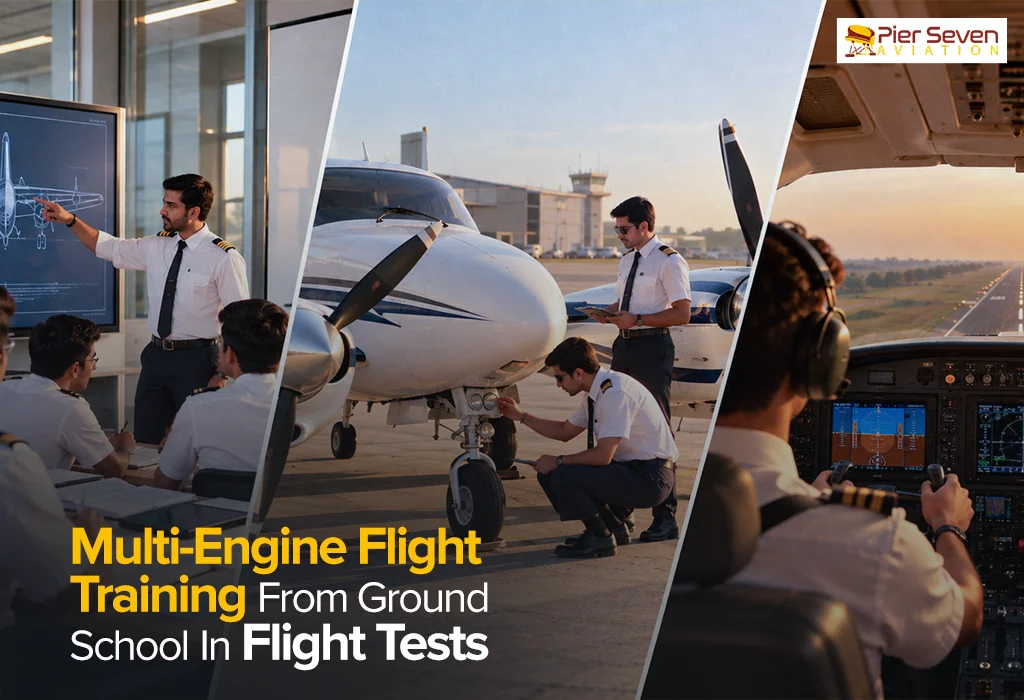
Moving from single-engine flying to a twin-engine aircraft is an important step in a pilot’s development. The aircraft introduces new systems, performance considerations, cockpit procedures, and emergency scenarios that require a more structured approach to training. At the DGCA-approved training institute, P7 Aviation, we combine theoretical learning, practical preparation, and professional guidance to help pilots build the skills needed for multi-engine operations.
For anyone considering our multi-engine training Sharjah, understanding what happens before, during, and after the flight phase can make the training process much easier to navigate.
What Makes Multi-Engine Training Different?
A multi-engine aircraft is not simply a larger version of a single-engine aircraft. Pilots must understand how two engines affect aircraft performance, handling, workload, and decision-making.
Training introduces areas such as:
- Engine-out procedures
- Asymmetric thrust and aircraft control
- Performance calculations
- Engine systems and limitations
- Take-off and landing considerations
- Emergency procedures
- Instrument operations
- Multi-engine aircraft handling
The objective is to develop consistent responses rather than relying on instinct alone. A pilot needs to recognize an abnormal situation, maintain control, identify the problem, and follow the appropriate procedure.
Step 1: Build Knowledge Before Flying
The first phase of our multi-engine training Sharjah involves understanding the aircraft and its systems before applying that knowledge in flight.
This is where our ground school Sharjah becomes important. Students study the aircraft’s technical characteristics, performance, limitations, procedures, and operational considerations.
The theoretical phase can cover:
- Aircraft systems and engines
- Performance and weight considerations
- Multi-engine aerodynamics
- Engine failure procedures
- Instrument procedures
- Emergency handling
- Operational decision-making
A strong theoretical foundation reduces the amount of information a pilot has to process for the first time inside the cockpit.
Step 2: Understand Multi-Engine Performance
Performance planning becomes particularly important when operating a twin-engine aircraft. Pilots need to understand what happens when both engines are available and how performance changes following an engine failure.
Important concepts include:
- Take-off performance
- Climb capability
- Single-engine performance
- Best single-engine rate or angle of climb
- Weight and balance
- Density altitude
- Landing performance
Rather than memorising isolated numbers, students should learn how aircraft weight, weather, runway conditions, and engine performance influence the available margins.
Step 3: Prepare Before Entering The Aircraft
Preparation should continue outside the cockpit. A student should arrive for each flight knowing the objectives, aircraft limitations, expected exercises, and relevant emergency procedures.
A pre-flight briefing may cover:
- Flight objectives
- Aircraft configuration
- Weather conditions
- Route and navigation
- Engine failure scenarios
- Communication procedures
- Performance calculations
- Safety considerations
This preparation is an important part of our aviation training Sharjah because professional pilots are expected to approach every flight systematically.
Step 4: Move Into Practical Flying
Once the necessary knowledge has been established, students begin applying it during actual flight training.
Early sessions normally focus on becoming comfortable with the aircraft’s handling characteristics. As proficiency improves, training can progress toward more demanding exercises and simulated abnormal situations.
During our multi-engine training Sharjah, pilots need to develop smooth aircraft control while managing a higher workload. Instructor feedback is particularly valuable at this stage because small errors can become more significant when an aircraft is operating with asymmetric thrust.
The goal is not simply to complete the required exercises. It is to demonstrate controlled, repeatable performance.
A Typical Training Progression:
Step 5: Learn To Manage Engine Failure
Engine failure is one of the defining areas of multi-engine training. Pilots must learn to maintain control first, identify the failed engine correctly, and then carry out the appropriate checklist and performance considerations.
This training develops more than aircraft handling. It teaches pilots how to prioritize tasks under pressure.
A typical sequence involves:
- Maintaining directional and pitch control
- Identifying the affected engine
- Confirming the failure
- Applying the applicable procedure
- Assessing aircraft performance
- Selecting an appropriate course of action
Repetition helps make these actions more disciplined and predictable.
Step 6: Prepare For The Flight Test
The final stage is about demonstrating that the required skills can be performed to the applicable standard.
Before a test, students should review:
- Aircraft limitations
- Normal procedures
- Emergency procedures
- Performance calculations
- Instrument procedures
- Communication requirements
- Common training weaknesses
The instructor can use mock-test flights to identify areas that need additional practice.
What To Look For In A Training Centre
Choosing the right pilot school Sharjah involves more than checking the course price. Students should assess the complete training environment.
Consider:
- Aircraft availability
- Instructor experience
- Training aircraft condition
- Simulator access
- Ground-school facilities
- Scheduling flexibility
- Regulatory approvals
- Student support
- Flight-test preparation
A pilot school Sharjah should also be transparent about what is included in the course and what additional costs may apply.
For international pilots, especially those planning to return to India, it is worth confirming documentation and licensing requirements before beginning aviation training Sharjah.
How Multi-Engine Training Supports An Airline Career
Multi-engine experience can become an important part of an airline-focused pilot pathway. Commercial airline aircraft are typically multi-engine, and pilots must be comfortable managing complex systems, procedures, and workload.
However, multi-engine training is only one stage of professional development. Depending on the career pathway, pilots may later progress to instrument qualifications, MCC, JOC, type rating, and other airline-oriented training.
For candidates combining multi-engine training Sharjah with a broader commercial pathway, planning these stages can make the overall progression more organized.
Take The Next Step With Multi-Engine Training
Moving into a twin-engine aircraft is a meaningful progression for pilots who want to expand their operational capabilities. From ground school Sharjah through aircraft handling, emergency exercises, and the final assessment, every stage contributes to developing a more capable and disciplined pilot.
We focus on structured learning, practical preparation, and professional standards throughout the training process. For pilots, comparing multi-engine training Sharjah, choosing the right program, understanding the applicable regulations, and preparing thoroughly for the flight test can create a stronger foundation for the next stage of an aviation career. P7 Aviation is a DGCA-approved training institute that supports pilots with a broader range of training pathways and modern aviation training resources in Sharjah.
FAQs
It introduces pilots to multi-engine aircraft handling, engine-out procedures, performance management, and higher cockpit workloads that are relevant to professional aviation.
Students generally study aircraft systems, performance, limitations, aerodynamics, procedures, emergencies, and operational considerations before applying this knowledge during flight training.
It depends on the specific course and regulatory pathway. Some approved programs use simulators to practice procedures before or alongside aircraft training.
This can depend on the intended DGCA licensing pathway and the approval of the training organization. Candidates should confirm the applicable requirements with DGCA before enrolling.
The examiner assesses whether the pilot can perform the required maneuvers, procedures, and operational tasks to the applicable standard. The exact test profile depends on the license or rating being pursued.