

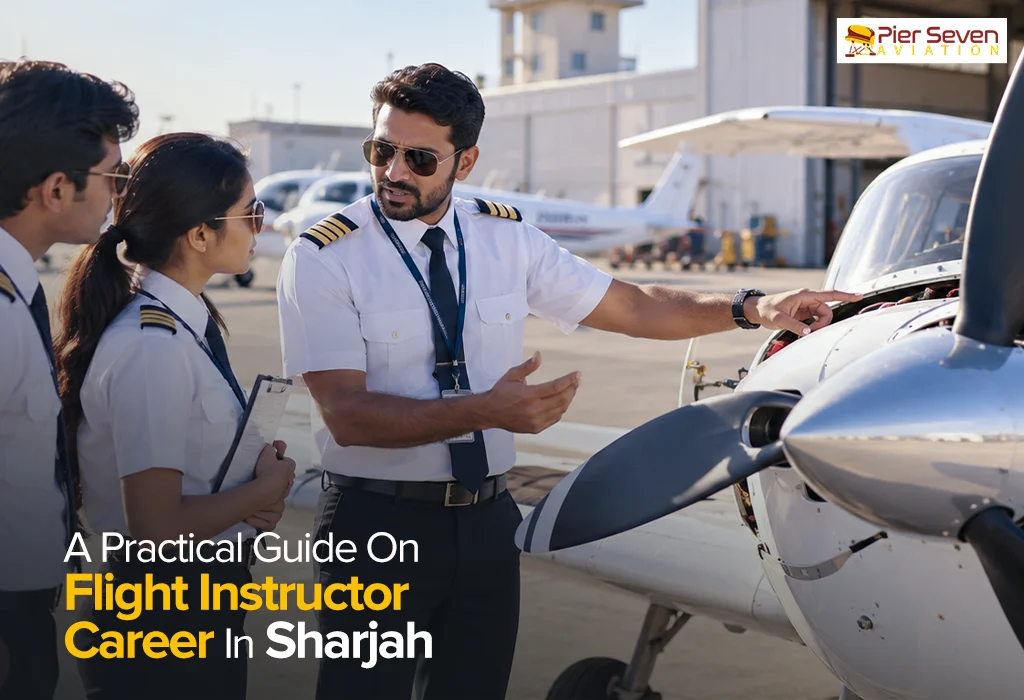
Becoming a flight instructor can be a rewarding way to turn flying skills into a professional aviation career. In addition to teaching students, instructors develop stronger communication, decision-making, leadership, and safety-management abilities. For aspiring aviators considering a flight instructor Sharjah career, understanding the qualifications, training pathway, responsibilities, and career opportunities is essential. P7 Aviation offers a professional aviation training environment in Sharjah where pilots can build the knowledge and skills needed for different stages of their careers.
What Does A Flight Instructor Do?
A flight instructor does much more than demonstrate how to operate an aircraft. The role involves helping students understand aviation theory, develop practical flying skills, follow procedures, manage risks, and make sound decisions.
An instructor may conduct briefings before flights, demonstrate maneuvers, monitor student performance, provide corrections, and conduct detailed debriefings afterward. Patience and clear communication are particularly important because every student learns at a different pace.
Our flight instructor Sharjah pathway can therefore be suitable for pilots who enjoy both flying and teaching. The experience can also strengthen the professional skills required in other aviation roles.
What Are The Requirements To Become an Instructor?
The exact requirements depend on the aviation authority, aircraft category, and instructor privileges being sought. Pilots should always verify the current rules applicable to their intended license.
Under GCAA flight-crew licensing regulations, applicants for an instructor certificate must be at least 18 years old. Additional requirements apply to pilots providing instruction, including holding the relevant license or rating for the training being provided and meeting the applicable experience or assessment requirements.
This means aspiring instructors should first establish which instructor certificate they need and what prerequisites apply before starting the training.
Build A Strong Pilot Foundation First
Teaching someone else to fly requires a strong understanding of the fundamentals. Before pursuing instructor privileges, pilots need appropriate flying experience, technical knowledge, and confidence in aircraft operations.
This foundation is developed through our structured pilot training courses Sharjah, where students can progress through the qualifications required for their intended career. Depending on the pathway, training may include private or commercial pilot qualifications, instrument training, multi-engine experience, and additional professional preparation.
The objective is not simply to collect certificates. A future instructor needs to understand why procedures work and explain them clearly to someone learning them for the first time.
Develop Both Flying And Teaching Skills
Being a skilled pilot does not automatically make someone an effective teacher. Instruction requires a different skill set.
A good instructor needs to:
- Explain technical subjects in simple language
- Demonstrate procedures accurately
- Recognize student errors early
- Give constructive feedback
- Manage risks throughout a flight
- Adapt teaching to different learning styles
- Maintain professional communication
- Encourage safe decision-making
This combination of technical and teaching ability is what makes our flight instructor Sharjah career different from simply working as a commercial pilot.
Choose The Right Training Environment
Where you complete your preparation can influence your development as an instructor. When comparing our pilot training courses Sharjah, look beyond the advertised course fee and consider the quality of instructors, aircraft, training facilities, learning materials, and student support.
A professional training environment should provide opportunities to practice both technical knowledge and communication. Briefings and debriefings are particularly valuable because they teach future instructors how to identify performance issues and explain improvements.
We focus on structured training, safety, professionalism, and practical learning so that pilots can develop confidence alongside their technical knowledge. P7 Aviation’s Sharjah facility includes experienced instructors, modern training technology, and simulator resources supporting different stages of pilot development.
Understand Pilot Certification Requirements
Before enrolling, determine exactly which qualification or instructor privilege you are working toward. Pilot certification Sharjah requirements can differ depending on the license authority, aircraft category, and intended instructional privileges.
For pilots planning to work within the UAE, GCAA requirements should be checked directly. International pilots should also understand whether their existing qualifications can be recognized, converted, or used toward the intended instructor pathway.
Keeping documentation organized is equally important. Training records, licenses, medical certificates, examinations, ratings, and other required documents may all form part of the licensing process.
Gain Practical Instruction Experience
Once the required qualifications and instructor training are completed, practical teaching experience becomes extremely valuable. Working with students exposes instructors to different learning styles, skill levels, and real-world training challenges.
A new instructor may begin by teaching foundational flying skills and gradually develop greater confidence through repeated instruction. Each lesson provides an opportunity to improve the ability to demonstrate, observe, diagnose, and correct.
This experience can also strengthen a pilot’s own understanding. Explaining aerodynamics, aircraft systems, navigation, procedures, and risk management repeatedly can reveal gaps in knowledge that might not be obvious when flying alone.
Where Can A Flight Instructor Career Lead?
Flight instruction can be a stepping stone toward airline flying, but it does not have to be treated only as a temporary position. Some pilots build long-term careers in instruction and progress toward senior training or management positions.
Others use instructional experience to develop the flight hours and professional skills required for subsequent aviation roles.
With appropriate pilot certification Sharjah and experience, instructors may explore opportunities involving advanced training, simulator instruction, standardization, training management, or other professional aviation roles, depending on their qualifications and the applicable regulations.
Why Professional Training Matters
A strong instructional career begins with a strong pilot foundation. This is why our professional pilot training Sharjah should focus on more than passing examinations. Students should develop disciplined operating habits, sound judgement, technical understanding, communication skills, and a strong safety mindset.
Future instructors also need to understand that their performance influences the pilots they teach. A student can carry an instructor’s habits, attitudes, and procedures throughout an entire career.
For this reason, selecting our pilot training Sharjah pathway is an important decision. Training quality, instructor experience, facilities, regulatory alignment, and opportunities for practical development should all be considered.
Build Your Future In Flight Instruction
A career as a flight instructor combines aviation knowledge with the responsibility of developing the next generation of pilots. For candidates considering our flight instructor Sharjah pathway, the process should begin with the right qualifications, a strong flying foundation, and deliberate development of teaching skills.
We believe professional aviation education should prepare pilots for more than examinations. It should develop the judgement, confidence, discipline, and communication needed in real-world operations. With the right professional pilot training Sharjah pathway, and continued experience, P7 Aviation’s aspiring instructors can build a rewarding career while helping future pilots develop safe and effective flying habits.
FAQs
Yes. Instruction can help pilots strengthen technical knowledge, communication, decision-making, and practical experience while building a professional aviation career.
Requirements depend on the applicable aviation authority, license category, and instructor privileges. Candidates should check the current GCAA requirements and confirm the prerequisites for their intended instructor certificate.
Yes. An instructor must be able to explain complex subjects clearly, recognize student mistakes, provide useful feedback, and maintain a safe learning environment.
Yes. With additional qualifications and experience, instructors can pursue advanced instructional, simulator, training-management, or airline-related opportunities, subject to applicable requirements.
Compare regulatory requirements, training quality, instructor experience, facilities, aircraft or simulator access, course structure, student support, and the opportunities available after qualification.