

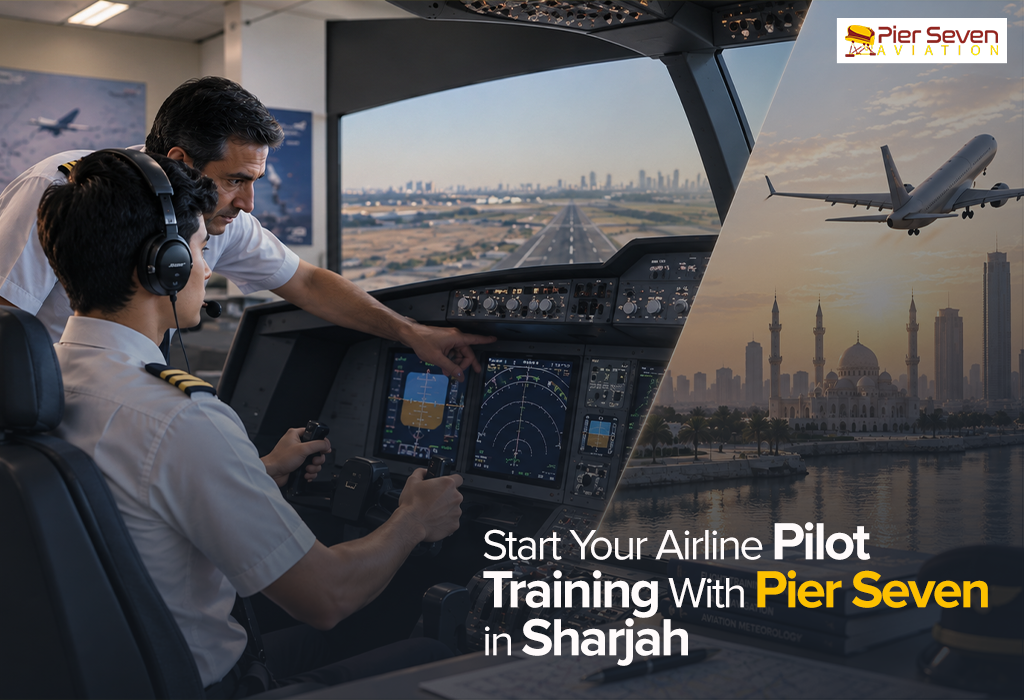
For many aspiring pilots, the dream of flying for an airline begins with one practical question: where should the training journey start? Choosing a training provider is about more than finding a flight school. Students need the right combination of theoretical education, flight experience, simulator exposure, instructor support, and a licensing pathway that matches their career plans.
For students considering the UAE, airline pilot training in Sharjah can offer a structured environment for building the knowledge and skills required for professional aviation. Pier Seven provides pilot training and simulator-based programs in Sharjah, including integrated and modular training pathways and airline-focused courses.
What Does Airline Pilot Training In Sharjah Involve?
Airline pilot training is a progressive process. Students do not simply learn how to control an aircraft. They develop knowledge of aviation regulations, navigation, meteorology, aircraft systems, flight planning, communication, human factors, and operational procedures.
The exact route depends on the license and regulatory authority a student intends to follow. Someone starting without previous flying experience may choose an integrated pathway, while another candidate may prefer modular training that allows different qualifications to be completed in stages.
This is why choosing pilot training Sharjah should involve looking at the entire training pathway rather than focusing only on the number of flying hours or advertised course duration.
Start With The Right Eligibility And Medical Preparation
Before enrolling, prospective pilots should confirm the eligibility requirements applicable to their chosen license. These may include age, educational qualifications, English-language proficiency, documentation, and an aviation medical assessment.
A medical assessment is particularly important because discovering a medical issue after investing significant time and money into training can be difficult. Students should therefore understand the applicable medical requirements early and obtain the appropriate assessment before committing to a long-term training plan.
It is equally important to identify the licensing authority connected with the intended career. Requirements can differ between EASA, GCAA, DGCA, and other aviation authorities.
Build Your Foundation Through Ground Training
Successful pilots rely on much more than practical flying skills. Ground school provides the knowledge needed to understand what is happening inside and around the aircraft.
Depending on the training pathway, students may study the following:
- Aviation legislation and procedures
- Meteorology
- Navigation
- Aircraft general knowledge
- Flight planning
- Human performance
- Radio communication
- Principles of flight
Good aviation training Sharjah should connect these subjects with practical flying. For example, learning about weather becomes more meaningful when students understand how changing conditions can influence flight planning and cockpit decisions.
Progress From Basic Flying To Professional Skills
Practical training generally develops progressively. Students begin with fundamental aircraft handling before moving into navigation, more complex maneuvers, solo flying, instrument-related skills, and other advanced exercises required by their chosen license.
As students gain experience, they also learn to manage workload, communicate effectively, follow procedures, and make decisions under changing conditions.
For someone pursuing airline pilot training in Sharjah, these skills matter because airline flying involves teamwork, standard operating procedures, technical knowledge, and disciplined decision-making in addition to aircraft handling.
Why Simulator Training Matters
Flight simulators have become an important part of professional aviation training. They allow students and qualified pilots to practice procedures and scenarios in a controlled environment without the operational limitations of an aircraft.
Simulator sessions can be particularly useful for:
- Cockpit familiarisation
- Instrument procedures
- Abnormal and emergencies
- Workload management
- Multi-crew operations
- Airline-style procedures
It lists A320, B737, and B747 simulator capabilities at its Sharjah facility and describes its training environment as incorporating advanced simulator technology.
This type of training can help bridge the gap between basic flight experience and the structured operating environment pilots encounter in commercial aviation.
Consider EASA and DGCA Requirements Carefully
Students often search for an EASA-approved training institute when planning a European licensing pathway. However, approval should always be checked for the specific organization, course, and privileges involved. EASA maintains a formal framework for approving and overseeing training organizations, including continued surveillance of approved organizations.
Similarly, Indian students should understand the requirements of India’s aviation regulator before choosing overseas training. Looking for a DGCA-approved training institute should involve checking the current approval status and exact scope of training rather than relying only on promotional terminology.
This distinction is important because completing a course in another country does not necessarily mean every requirement for a license in another jurisdiction has automatically been satisfied.
Choose A Training Path That Matches Your Career Goal
Not every aspiring pilot needs the same training route. An integrated program may suit a student who wants a structured progression, while modular training can provide flexibility for someone completing qualifications step by step.
When comparing pilot training Sharjah options, consider the following:
- The license or qualification the program leads toward
- Applicable aviation authority requirements
- Flight and simulator training included
- Instructor experience
- Aircraft and simulator availability
- Examination and assessment arrangements
- Accommodation and logistical support
- Additional costs beyond the advertised course fee
- Opportunities for advanced or airline-focused training
A lower initial price is not necessarily the better choice if important training components are excluded.
Moving Toward An Airline Cockpit
Initial pilot training is only part of a professional aviation career. Depending on the chosen pathway, pilots may need additional ratings, multi-engine experience, instrument qualifications, airline assessments, type-specific training, and other requirements before entering airline operations.
This is where professional pilot training Sharjah becomes more than simply accumulating flight hours. Students should think about how their initial training can prepare them for the next stages of their career.
Pier Seven Aviation’s current training portfolio includes integrated and modular 0-to-ATPL(A) training, CPL(A)/IR under EASA, multi-crew cooperation, a jet orientation course, and aircraft type-rating programs, including A320 and B737.
What Can Students Learn From Other Airline Training Models?
Airline-focused academies commonly place emphasis on multi-crew operations, airline procedures, professional behavior, and decision-making alongside traditional flight training. For example, Air Arabia Academy describes its MPL program as an airline-dedicated professional pilot license pathway built around the skills, knowledge, and attitudes expected of future airline pilots.
This highlights an important point for prospective students: airline preparation is not only about becoming comfortable in an aircraft. It is also about learning to operate within a highly structured, team-based environment.
When evaluating airline pilot training in Sharjah, students should therefore ask how the program prepares them for the operational expectations that come after initial licensing.
Summary
Starting an airline career requires more than enthusiasm for flying. Students need a clear licensing plan, strong theoretical knowledge, practical experience, simulator exposure, and training that prepares them for the professional standards of commercial aviation. The right aviation training Sharjah program should therefore be evaluated on its complete training structure rather than one feature alone.
Pier Seven Aviation combines pilot training with advanced simulator capabilities and airline-oriented courses in Sharjah, offering aspiring pilots different routes to develop their aviation careers. Taking time to understand eligibility, regulatory requirements, course content, and long-term career goals can help students begin their pilot-training journey with greater clarity and confidence.
FAQs:
The first step is to understand the eligibility and medical requirements for your intended license. You should then choose a training pathway that matches your long-term aviation goal.
Yes. Simulators provide a controlled environment for practicing procedures, cockpit operations, abnormal situations, and multi-crew skills that complement practical aircraft training.
It depends on your circumstances. Integrated training provides a structured progression, while modular training allows qualifications to be completed in separate stages. Your experience, budget, and career objective can help determine which route is appropriate.
Indian students can explore training options in the UAE, but they should check current DGCA requirements and any applicable licensing or conversion procedures before beginning overseas training.
Review the applicable approvals, license pathway, course structure, aircraft and simulator availability, instructor experience, total costs, examination requirements, and support services. Most importantly, make sure the training route matches the country and type of aviation career you ultimately want to pursue.